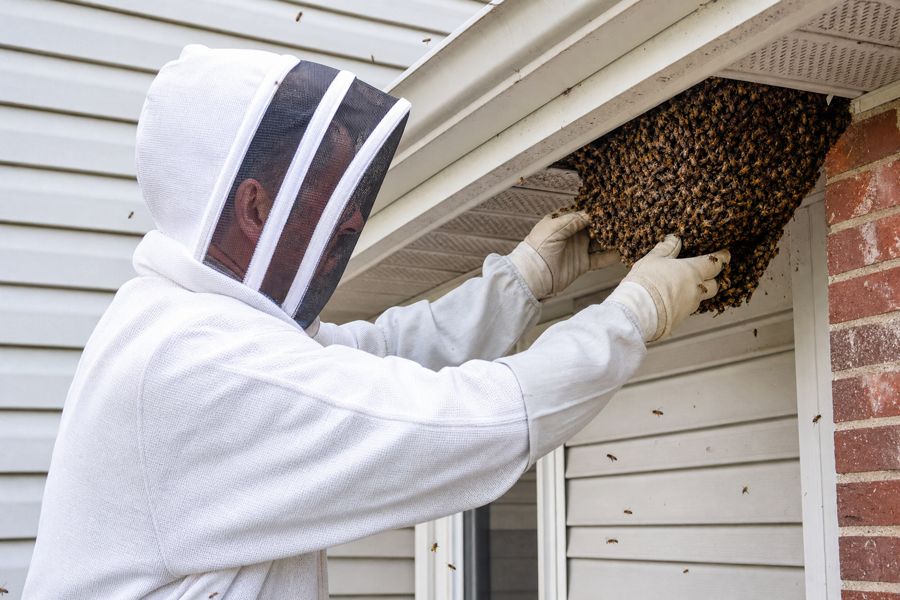
Swarms · hives in walls and eaves · carpenter bees
Bee removal near you
A swarm hanging in the tree, bees going in and out of the siding, or perfect round holes drilled in the deck rail. Call and we put you through to a local company that handles bees — honey bees get relocated to a beekeeper wherever that is practical.
- Real person answers, day or night
- Same-day visits in most areas
- Price agreed before work begins
- No obligation
Is this what you have?
The signs
- A hanging cluster of bees on a branch, fence or car — a swarm, usually temporary
- Steady bee traffic in and out of one gap in siding, soffit or brick
- Humming or warmth inside a wall on a hot day
- Honey staining or a sweet smell coming through drywall
- Round half-inch holes in deck rails, fascia or trim, with sawdust below
- Bees turning up inside the house near windows, day after day
Heads up. Don’t spray a hive inside a wall or plug the entrance. Sealed-in bees push through into the house, and the abandoned comb melts and leaks honey that draws other pests.
On the day
What the technician does
- Work out what you actually have
Honey bee, bumblebee or carpenter bee — and where the nest really is, which is often not where you see the bees.
- Live removal where it is possible
Swarms in the open and reachable hives are usually collected for a beekeeper. A colony inside a wall means opening the soffit or siding.
- Comb and honey taken out
Comb left behind leaks, smells and attracts the next colony, so it comes out and the cavity is cleaned.
- Closed up so it doesn’t repeat
The gap gets sealed. Carpenter bee holes are treated and plugged before the next spring.
Practical
Getting ready, and what it runs
Preparation
Keep people and pets away from the entrance and leave it open. Note where the bees go in and at what time of day — that saves the technician a lot of searching.
One visit or ongoing
Usually one visit. Carpenter bees come back to the same wood each spring, so a yearly treatment or a coat of paint on exposed wood often gets suggested.
What moves the price
- A swarm on a branch versus a colony inside a wall — opening and repair is the expensive part
- Height and access: roof line, second story, tree work
- Live relocation or destruction
- Putting the siding or soffit back afterwards
Questions
Bee removal — questions we get a lot
Who do I call for bee removal?
Call (833) 784-1375. We connect you with a local company that handles bees. For a swarm sitting in the open they may bring in a beekeeper to collect it.
Is bee removal free?
Some beekeepers collect an easy, reachable swarm for little or nothing. A colony inside a structure is real work — opening up, removing comb, sealing — and is priced accordingly. Ask on the call.
Will the bees be killed?
Not as a first resort. Honey bees are relocated wherever it is practical. A colony that can’t be reached, or one behaving aggressively, may have to be destroyed — you’ll be told before anything is done.
Bees or wasps?
Bees are rounder and furry. Wasps are slim, smooth and shiny with a narrow waist. If they came out of a grey paper nest or a hole in the lawn, see wasps and hornets.
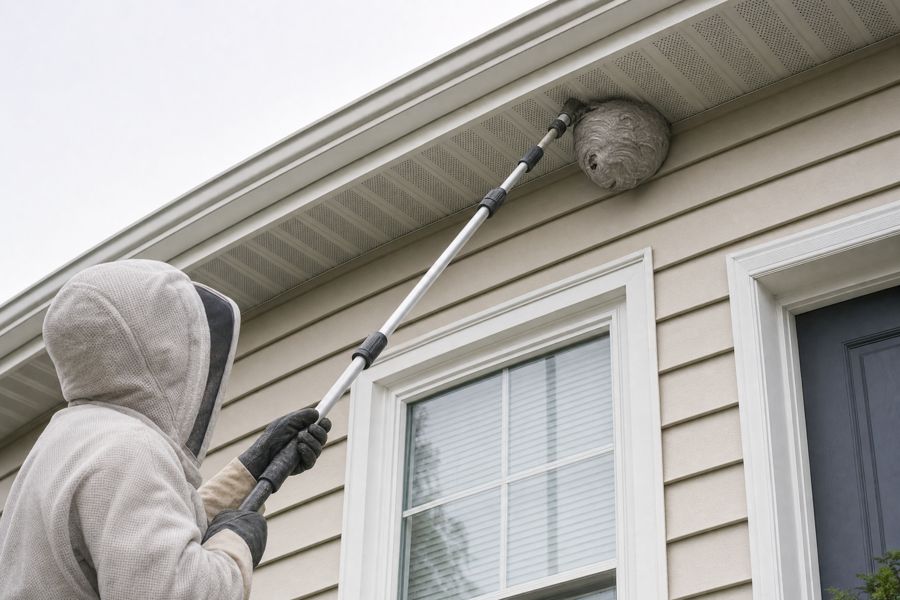 Wasp & hornet nests
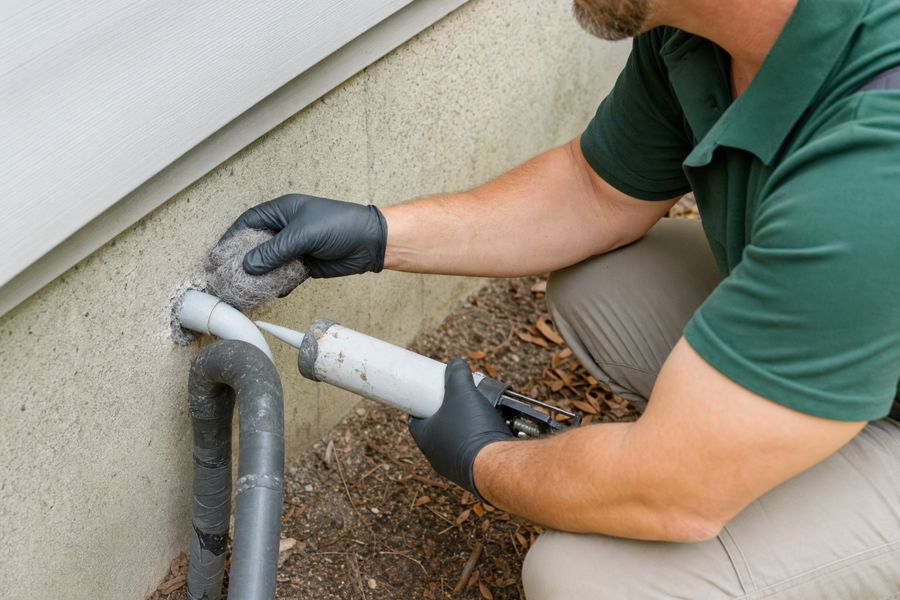 Mice & rats
 Bed bugs
 Cockroaches
Bee removal — let’s get it handled
Open 24 hours. Describe what you’re seeing and we’ll put you through to a local company.